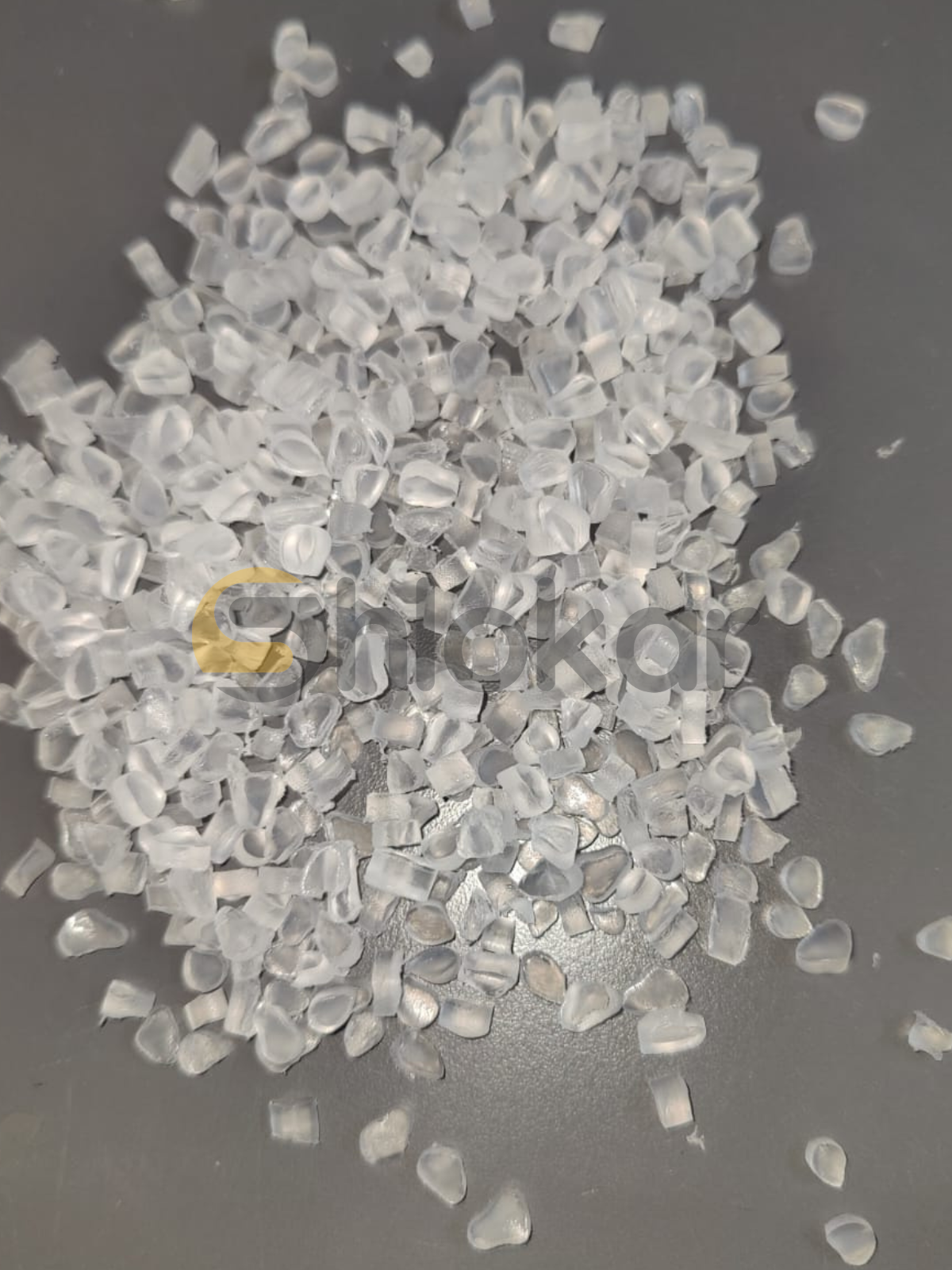
What Is MFI in Plastic?
Understanding Melt Flow Index
MFI in Plastic is an important measurement used to understand how easily a
thermoplastic material flows when it is heated. Also known as Melt Flow Index, MFI
helps manufacturers evaluate the flow behavior of plastic materials during processing. Therefore, it
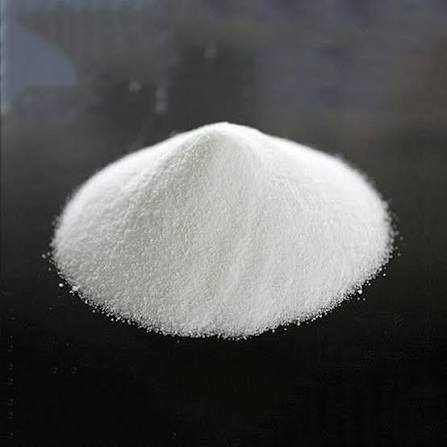
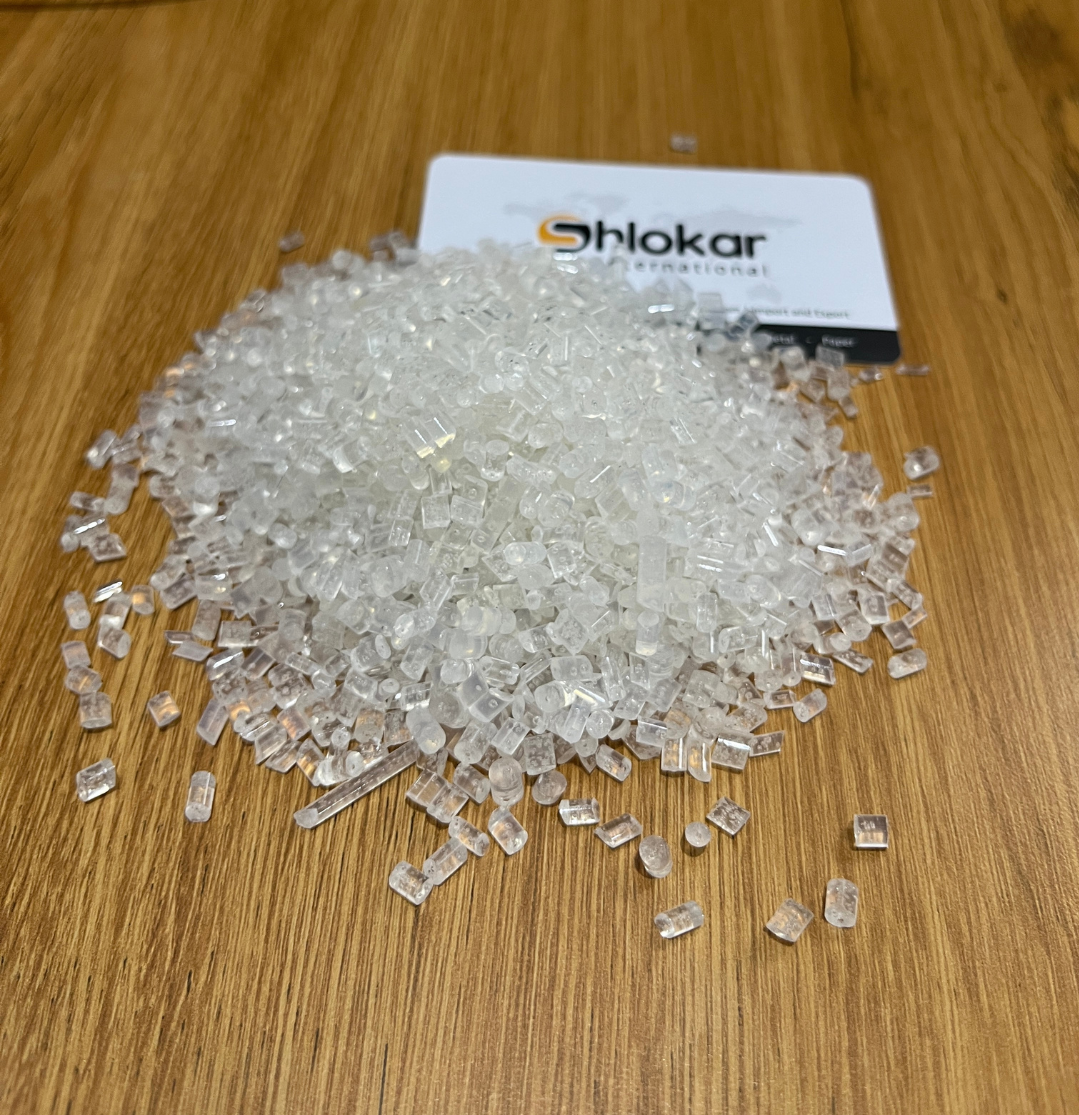
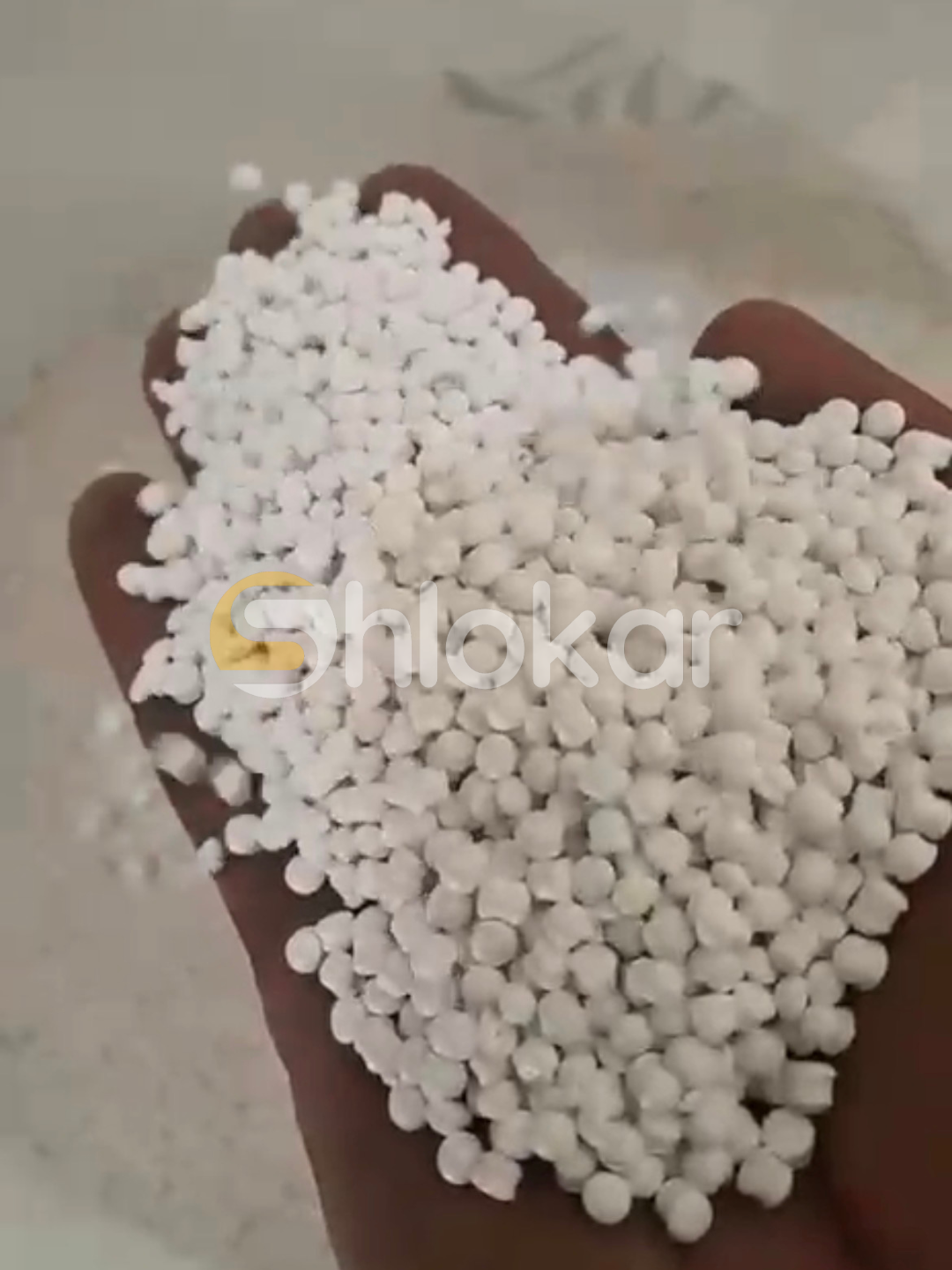
is commonly considered when selecting plastic granules, regrind, and other raw materials for
manufacturing.
Moreover, the MFI value can help manufacturers compare different grades of plastic granules,
regrind, and recycled plastic materials. A higher MFI generally indicates easier melt flow, while a
lower MFI generally indicates greater resistance to flow.
What Is MFI in Plastic?
MFI in Plastic refers to the amount of molten thermoplastic that passes through a standardized
die under a specified temperature and load during a fixed period. The result is normally expressed in grams per
10 minutes (g/10 min).
In simple terms, the Melt Flow Index indicates the flowability of plastic when it is in a
molten state. Therefore, manufacturers use MFI to help determine whether a particular plastic grade is suitable
for a specific processing method.
For example, two polypropylene materials can have different MFI values even though both materials are
polypropylene. One grade may flow more easily and therefore suit injection molding, while another grade may have
a lower flow rate and suit extrusion.
What Does Melt Flow Index Measure?
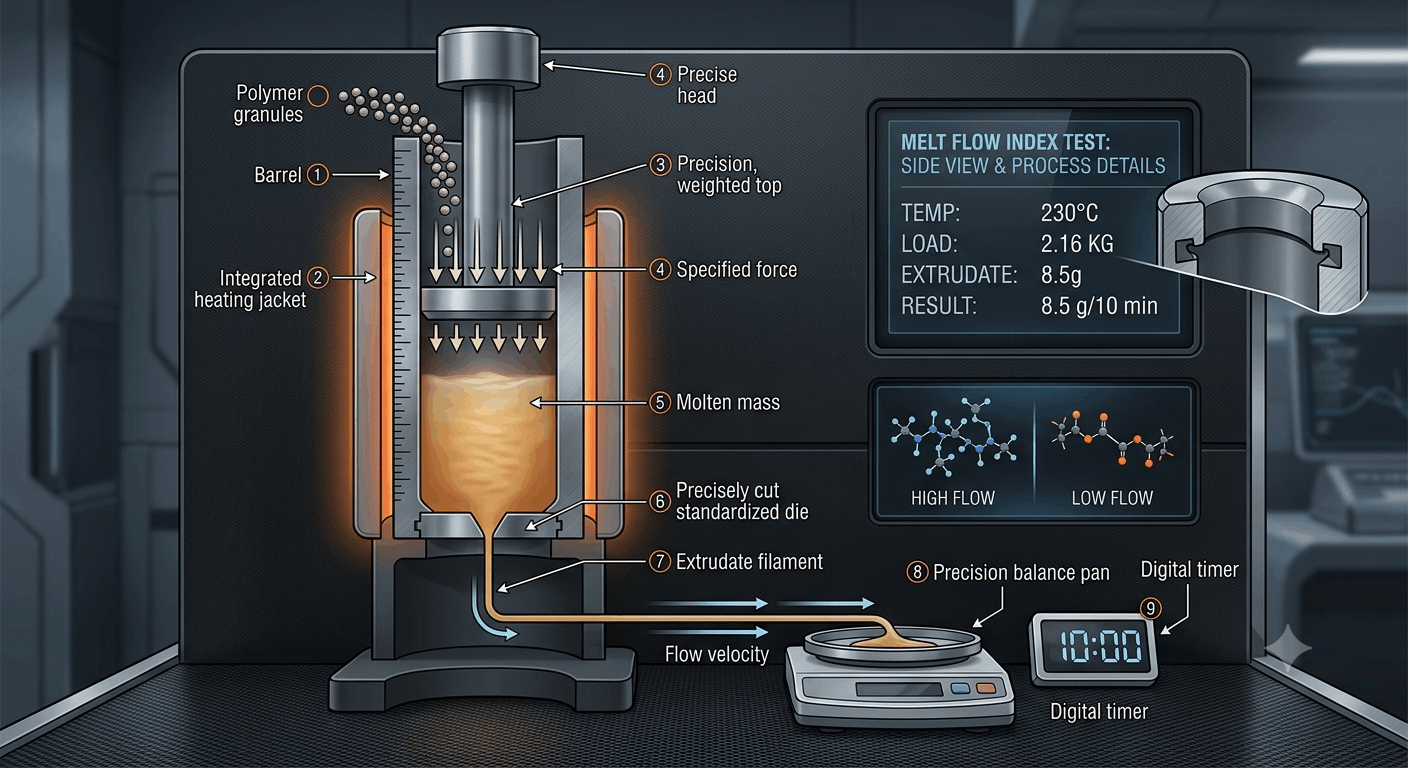
The Melt Flow Index primarily measures the flow behavior of molten thermoplastic material.
During the test, a plastic sample is heated inside a controlled barrel. Next, a specified load pushes the molten
material through a small die.
The material coming out of the die is then measured over a defined period. As a result, the test provides a
numerical value that can be used to compare similar plastic materials.
However, MFI is not a complete measurement of plastic quality. Instead, it should be considered together with
other properties such as moisture, density, contamination, color, and mechanical performance.
How Is MFI Testing Performed?
MFI Testing is performed using a Melt Flow Index Tester or Melt Flow Rate Tester. The exact
test temperature and applied load depend on the polymer and the relevant testing method.
First, a representative plastic sample is prepared. Next, the sample is heated to the specified temperature.
Then, a defined load is applied to push the molten polymer through the die.
Finally, the extruded material is collected and weighed. The result is then reported as grams per 10 minutes
under the specified testing conditions.
Important MFI Testing Conditions
When comparing MFI results, buyers should check the testing conditions. In particular, the
temperature and applied load are important because different conditions can produce different
results.
Therefore, buyers should avoid comparing two MFI values without first checking whether the test conditions are
the same.
What Does a High or Low MFI Mean?
The MFI of plastic provides an indication of how easily the material flows when molten.
Generally, a higher MFI means that the material flows more easily under the specified test conditions.
On the other hand, a lower MFI generally indicates greater resistance to flow. However, neither a high nor a low
MFI should automatically be considered better.
High MFI
A higher MFI generally means easier melt flow. Consequently, certain high-flow grades can be useful for
applications where easy mold filling is required.
Low MFI
A lower MFI generally indicates greater resistance to melt flow. Therefore, some low-flow grades may be selected
for applications where higher melt strength or different processing characteristics are required.
Why Is MFI Important in Plastic Manufacturing?
MFI is important because manufacturers need plastic materials that process consistently. Therefore, MFI is often
included in technical specifications when purchasing virgin or recycled plastic materials.
Moreover, checking MFI can help manufacturers compare different batches of similar materials. As a result, it
can support better raw material selection and quality control.
- MFI helps indicate melt-flow behavior.
- Moreover, it helps manufacturers compare different material grades.
- In addition, it can support raw material selection.
- Furthermore, it can help identify differences between batches.
- Therefore, MFI can be useful for production and quality control.
MFI and Different Plastic Processing Methods
Different manufacturing processes require different melt-flow characteristics. Therefore, the suitable MFI
depends on the processing method and the final product.
MFI for Injection Molding
Injection molding requires molten plastic to fill a mold cavity. Therefore, suitable flow characteristics can
help achieve consistent mold filling and efficient processing.
MFI for Extrusion
Extrusion involves continuously pushing molten plastic through a die. Consequently, manufacturers consider melt
flow together with melt strength, output requirements, and die design.
MFI for Blow Molding
Blow molding requires the molten polymer to maintain sufficient shape during processing. Therefore, the required
MFI can differ from the value used for injection molding.
MFI of Common Plastic Materials
Different polymers have different melt-flow characteristics. Furthermore, manufacturers can produce several
grades of the same polymer with different MFI values.
Polypropylene (PP)
PP is available in various MFI grades for injection molding, extrusion, and other applications. Therefore, the
required MFI depends on the finished product and manufacturing process.
High-Density Polyethylene (HDPE)
HDPE grades can have different MFI values for applications such as containers, pipes, blow molding, and
injection molding. Consequently, buyers should select the grade according to the intended application.
Low-Density Polyethylene (LDPE)
LDPE is commonly used for films, extrusion, coating, and molding. Therefore, different MFI grades are available
for different manufacturing requirements.
HIPS
HIPS can be available in different MFI grades depending on the intended application. For example, injection
molding requirements may differ from other processing applications.
ABS
ABS is available in multiple grades with different melt-flow characteristics. Therefore, manufacturers should
select an appropriate grade according to product design and processing conditions.
MFI in Recycled Plastic and Regrind
Plastic MFI is particularly useful when evaluating recycled plastic materials such as regrind
and recycled granules. During recycling, polymers can experience repeated heating and processing. Consequently,
their melt-flow characteristics can change.
For this reason, buyers may use MFI testing to compare different batches of recycled plastic. However, MFI
should not be the only quality parameter.
Other Parameters to Check
In addition to MFI, buyers should check moisture, contamination, color, density, particle size, polymer
identification, odor, and mechanical performance. Furthermore, a sample test can provide useful information
before placing a large order.
What Factors Can Affect MFI?
Several factors can influence the measured MFI of plastic. Therefore, buyers should understand these factors
before comparing different materials.
Polymer Type
Different polymers naturally have different flow characteristics. Therefore, MFI values should primarily be
compared between suitable grades of the same polymer.
Molecular Weight
Molecular weight can influence melt flow significantly. Generally, polymer structure and molecular weight affect
how the material behaves when heated.
Temperature
Temperature can influence melt flow. Consequently, MFI results should always be interpreted with the specified
test temperature.
Applied Load
The applied test load also affects the measured flow rate. Therefore, the load should be checked before
comparing MFI values from different reports.
Recycling and Thermal History
Repeated heating and processing can change polymer characteristics. As a result, recycled materials may show
different MFI values from their original virgin grades.
MFI vs Other Plastic Quality Parameters
Although MFI is an important parameter, it does not determine the complete quality of a plastic material.
Instead, manufacturers should evaluate several properties together.
MFI
MFI indicates the melt-flow behavior under specified test conditions.
Moisture
Moisture indicates the amount of water present in the material. Therefore, moisture testing can be particularly
important for certain plastic processing applications.
Density
Density indicates the mass per unit volume of the plastic. Moreover, density can help manufacturers compare
material specifications.
Contamination
Contamination can affect processing and final product quality. Therefore, recycled plastic buyers should
carefully inspect material cleanliness.
How Should Buyers Check MFI Before Purchasing Plastic?
Before purchasing plastic granules, regrind, or recycled materials, buyers should request the relevant technical
specifications from the supplier. In particular, buyers should confirm the MFI value, test temperature, applied
load, polymer type, and testing method.
Furthermore, buyers should request a
COA, TDS, or test report whenever available. For recycled materials, a physical sample can also
be useful. As a result, buyers can evaluate appearance, contamination, moisture, and processing behavior before
committing to a large quantity.
Why MFI Matters When Buying Recycled Plastic
For manufacturers purchasing recycled plastic, consistency is often as important as price. Therefore, checking
MFI can help buyers understand whether different batches have similar melt-flow characteristics under comparable
conditions.
Moreover, MFI can be useful when discussing material requirements with suppliers. For example, a buyer may
specify a required polymer, MFI range, moisture level, color, and application before requesting a quotation.
At Shlokar International, we understand that industrial buyers may require specific material
specifications. Therefore, we work with suppliers and buyers to match available recycled plastic materials with
their requirements.
Related Plastic Materials
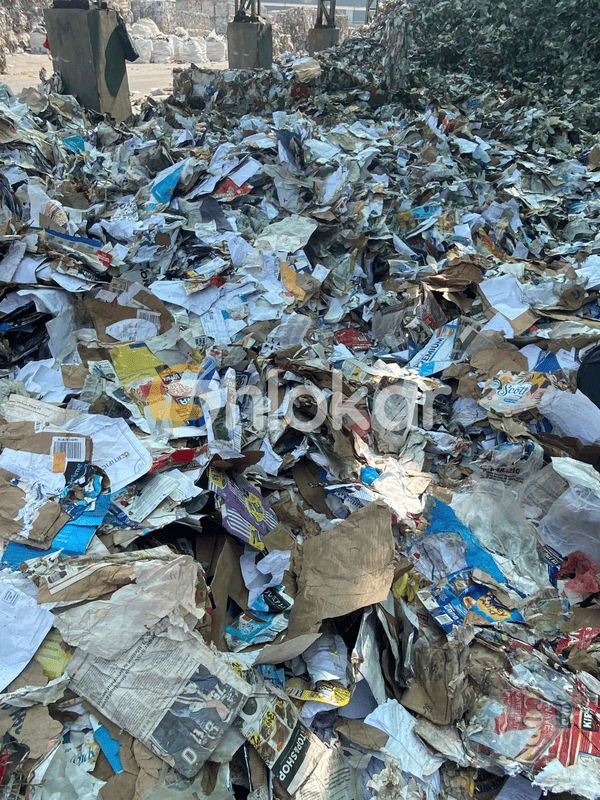
If you are looking for recycled plastic raw materials, you can also explore our Plastic Scrap .
IndiaMART — Shlokar International
In addition, Shlokar International supplies different types of plastic scrap, regrind, and recycled plastic
granules for industrial buyers. Contact us for current availability, specifications, and bulk requirements.
Key Takeaways About MFI in Plastic
- MFI stands for Melt Flow Index.
- MFI is commonly expressed in grams per 10 minutes.
- A higher MFI generally indicates easier melt flow.
- A lower MFI generally indicates greater resistance to flow.
- Therefore, the suitable MFI depends on the application.
- Moreover, temperature and applied load must be considered.
- MFI should not be used as the only indicator of plastic quality.
-
Furthermore, recycled plastic should also be checked for moisture, contamination, color, density, and other
specifications.
Frequently Asked Questions About MFI in Plastic
What does MFI mean in plastic?
MFI means Melt Flow Index. It measures the amount of molten thermoplastic that flows through a standardized die
under specified temperature and load conditions. Therefore, it provides an indication of melt-flow behavior.
What is a good MFI for plastic?
There is no single ideal MFI for every plastic. Instead, the suitable value depends on the polymer, processing
method, product design, and application.
Is higher MFI better?
Not necessarily. A higher MFI generally means easier melt flow. However, the correct value depends on the
intended manufacturing process and product requirements.
What is the unit of MFI?
MFI is commonly expressed as grams per 10 minutes, written as g/10 min. However, the test temperature and
applied load should also be specified.
Why is MFI important for recycled plastic?
MFI helps buyers understand the melt-flow behavior of recycled plastic. Therefore, it can be useful for
comparing material batches when the testing conditions are consistent.
Does MFI determine plastic quality?
No. MFI is only one quality parameter. In addition, buyers should consider moisture, contamination, density,
color, mechanical properties, and application performance.
Can MFI change after plastic recycling?
Yes. Repeated heating and processing can change polymer characteristics. Consequently, recycled plastic can have
different melt-flow behavior from the original material.
What should I check along with MFI?
Buyers should also check polymer type, moisture, contamination, color, density, particle size, origin, COA or
test report, and suitability for the intended application. Furthermore, testing a sample can help confirm
material suitability.
Conclusion
MFI in plastic is an important technical parameter for understanding the flow behavior of
thermoplastic materials. Therefore, it can help manufacturers select suitable grades for injection molding,
extrusion, blow molding, and other applications.
Nevertheless, MFI should not be considered independently. Instead, manufacturers and buyers should evaluate MFI
together with other important material properties and application requirements. As a result, a complete
technical evaluation can support better material selection and more consistent production.
Shlokar International supplies recycled plastic scrap, regrind, and granules for industrial
buyers. Therefore, contact us to discuss your required plastic grade, MFI, quantity, and application.
Email: info@shlokarinternational.com
WhatsApp: +91 96877 76077