
PP Scrap: Types, Uses, Grades, and Recycling Process
PP scrap represents one of the most widely recycled and commercially valuable thermoplastic polymers in the global recycling economy. In fact, utilizing recycled polypropylene reduces production energy consumption by up to 88% compared to synthesizing virgin resins. However, raw scrap sorting, melt flow index variations, and contamination control require careful technical management. Therefore, this comprehensive industrial guide covers primary PP scrap types, commercial grades, manufacturing applications, and modern mechanical recycling methods.
What Is PP Scrap and Why Is It in High Demand?
Polypropylene (PP, Resin Identification Code #5) is a semi-rigid thermoplastic polymer prized for its fatigue resistance, high melting point (160°C–170°C), and chemical durability. Specifically, it is utilized across diverse industrial packaging, automotive parts, and consumer textiles.
Consequently, massive industrial demand generates vast volumes of post-industrial (PIR) and post-consumer (PCR) scrap. Instead of sending valuable polymers to landfills, plastic compounders recover PP scrap to produce reprocessed pellets and compounded resins.
Furthermore, secondary polypropylene offers substantial cost savings for molders facing volatile petrochemical prices. Therefore, establishing a reliable scrap supply chain has become a top priority for plastic processors worldwide.
Primary Types of Industrial PP Scrap
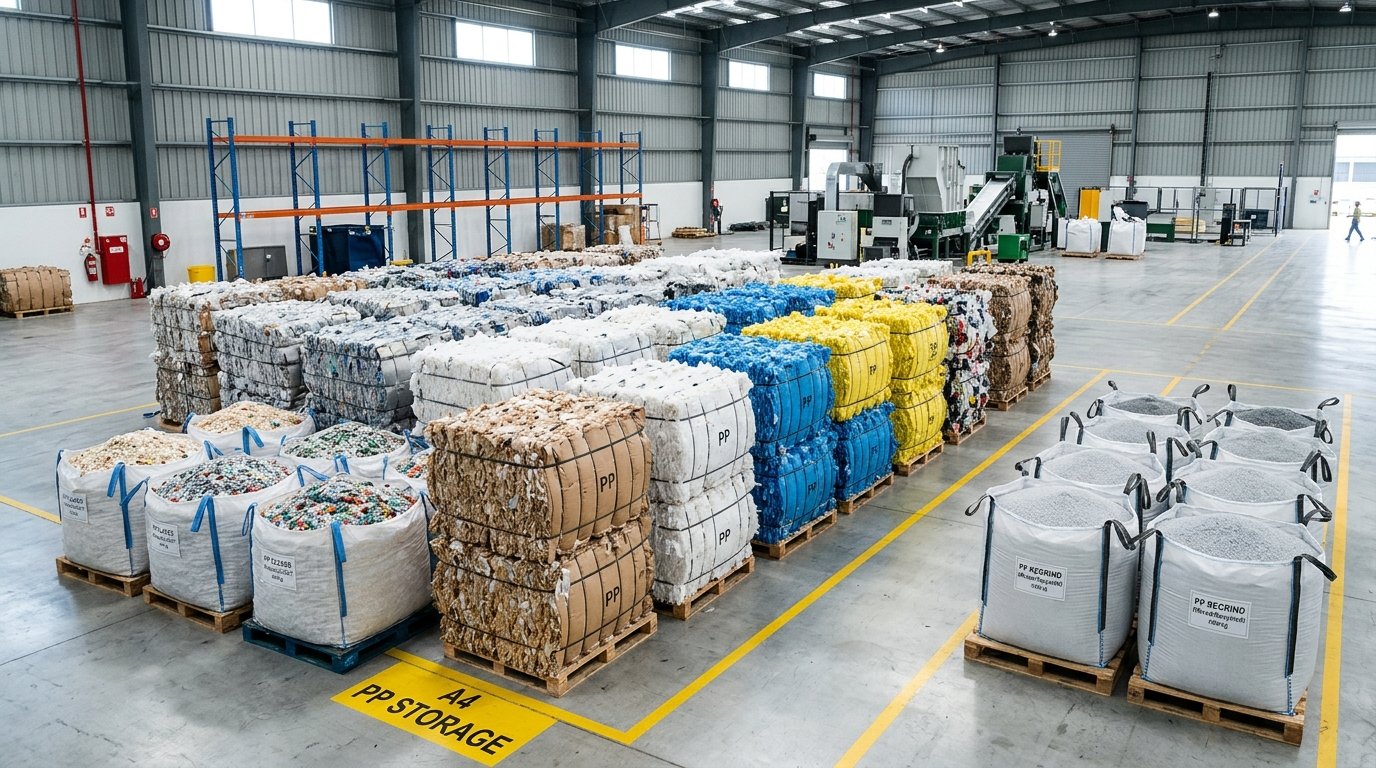
Industrial recyclers classify polypropylene scrap based on original manufacturing formats and physical structures. In particular, the following categories represent the most common commercial feeds:
- PP Raffia Scrap (Woven Sacks & FIBC Bags): Originates from polypropylene woven sacks, cement bags, fertilizer bags, and heavy-duty jumbo bags. In general, this scrap delivers excellent tensile strength and orientation.
- BOPP & CPP Film Scrap: Includes Biaxially Oriented Polypropylene (BOPP) and Cast Polypropylene (CPP) printed and unprinted flexible packaging films. Specifically, film rolls and edge trims provide high-purity clear feedstocks.
- PP Injection Molding Scrap: Consists of rigid molded components like battery casings, automotive bumpers, crates, pallets, buckets, and caps. For instance, black battery casing scrap is widely coveted for industrial compounding.
- PP Non-Woven Scrap: Generated from spunbond polypropylene roll cuts, hygiene filter media, masks, and disposable shopping bags. Because of its light bulk density, non-woven scrap is frequently compacted before extrusion.
- PP Regrind & Flakes: Pre-crushed rigid components or washed film flakes ready for direct compounding and extrusion.
- PP Purge & Lumps: High-density polymer chunks produced during extruder color changes and startup cycles.
Commercial PP Scrap Grades and Melt Flow Index (MFI)
Understanding the Melt Flow Index (MFI) is essential when selecting PP scrap for your manufacturing lines. For example, lower MFI grades exhibit higher molecular weight and impact strength, whereas higher MFI grades flow effortlessly into intricate mold cavities:
| PP Scrap Grade | Typical MFI (g/10 min) | Primary Characteristics | Ideal Processing Method |
|---|---|---|---|
| Extrusion & Blow Molding | 1.5 – 5.0 | High melt strength, high impact resistance | Pipe extrusion, blow-molded bottles, sheets |
| Raffia / Woven Grade | 2.5 – 6.0 | High elongation, high tensile strength | Woven sacks, strapping bands, geotextiles |
| General Injection Grade | 8.0 – 15.0 | Balanced flow, good dimensional stability | Household articles, crates, containers, furniture |
| High-Flow Injection Grade | 20.0 – 35.0+ | Rapid mold filling, low cycle times | Thin-wall packaging, caps, small technical parts |
| Copolymer PP (Impact Grade) | 5.0 – 25.0 | Ethylene copolymerized; superior sub-zero impact | Automotive battery boxes, bumpers, luggage |
Moreover, distinguishing between Homopolymer PP (rigid and brittle at cold temperatures) and Copolymer PP (tough and impact-resistant) ensures proper material formulation for your finished products.
The Industrial PP Scrap Recycling Process Step-by-Step
Transforming post-industrial and post-consumer scrap into high-purity recycled granules requires a precise multi-stage mechanical recycling system:
1. Collection and Visual Inspection
First, raw scrap consignments arrive at the recycling yard in compacted bales or loose crates. Inspectors verify polymer identification, color segregation, and moisture levels before processing.
2. Shredding and Size Reduction
Next, high-torque industrial shredders and wet granulators crush the scrap into uniform 8 mm to 12 mm flakes. Consistent particle size ensures uniform feeding into downstream washing tanks.
3. Float-Sink Density Separation
Subsequently, the shredded flakes enter water float-sink tanks. Because polypropylene has a specific gravity of 0.90 to 0.91 g/cm³, PP flakes float on water surfaces. In contrast, heavier contaminants such as PET, PVC, sand, and metals sink to the tank bottom.
4. Friction Washing and Hot Caustic Cleaning
Afterwards, continuous friction washers remove stubborn printing inks, glues, and organic residues. For heavily soiled agricultural sacks, recyclers use hot caustic wash baths to ensure thorough sterilization.
5. Centrifugal Mechanical Drying
Then, high-speed centrifugal dryers and hot-air cyclone de-dusters reduce surface moisture below 0.5%. Complete moisture removal is critical to prevent bubbles during extrusion.
6. Extrusion, Degassing, and Pelletizing
Finally, clean flakes enter a vented twin-screw extruder. Vacuum degassing zones extract volatile fumes, while continuous hydraulic screen changers filter out microscopic contaminants. The molten polymer is strand-cut or water-ring pelletized into uniform recycled PP granules.
Common Industrial Applications of Recycled PP
High-grade recycled polypropylene pellets derived from sorted scrap are widely integrated into diverse manufacturing sectors:
- ✅ Automotive Components: Molded into wheel arch liners, dashboard substrates, and battery casing boxes.
- ✅ Logistics & Material Handling: Fabricated into reusable heavy-duty pallets, transport crates, and warehouse bins.
- ✅ Construction & Civil Engineering: Formed into corrugated drainage pipes, inspection chambers, and geotextile stabilization mats.
- ✅ Packaging & Containers: Blended into non-food buckets, paint cans, cosmetic secondary caps, and industrial pails.
- ✅ Agricultural Supplies: Extruded into plant nursery pots, seedling trays, and drip irrigation hardware.
In addition, compounders often blend recycled PP with virgin polymer, calcium carbonate (CaCO3), or talc to enhance stiffness and lower part production costs.
Quality Control and Inspection Standards for PP Scrap
To guarantee smooth production and minimize extruder downtime, buyers must enforce strict raw material quality specifications. In particular, consider these core testing standards:
- Ash Content Testing: Determines the percentage of calcium carbonate, talc, or mineral filler present in the scrap via calcination.
- Contamination Tolerances: Verifies that foreign polymers (such as PE or PVC) remain under 1% to prevent phase separation.
- Moisture Analysis: Ensures incoming regrind contains less than 1% moisture to avoid hydrolytic degradation and foaming.
- Melt Flow Verification: Confirms the MFI matches the target mold cavity geometry and barrel temperatures.
Consequently, auditing your supplier’s testing capabilities protects your business from substandard shipments.
Source Reliable Plastic Raw Materials With Shlokar International
At Shlokar International, we connect manufacturing plants, recyclers, and compounders with consistent secondary polymers and industrial raw materials.
In addition to polypropylene solutions, we supply premium polymer materials including White EPS Recycled Granules, Black EPS Granules, and industrial polymer resins.
Furthermore, our sourcing operations maintain strict quality controls, verified assays, and dependable containerized logistics. Connect with our trade specialists on IndiaMART or contact our desk directly to discuss your monthly raw material requirements.
Frequently Asked Questions (FAQ) About PP Scrap
Q1: Can PP scrap be recycled indefinitely?
A: While polypropylene can be mechanically recycled multiple times, each thermal heating cycle slightly degrades polymer chain length. Therefore, recyclers commonly add thermal stabilizers, antioxidants, or virgin resin blends to restore optimal mechanical performance.
Q2: How do recyclers distinguish PP scrap from HDPE scrap?
A: Both polymers float on pure water. However, recyclers use Near-Infrared (NIR) optical sorting, burn tests (PP smells like candle wax with a sweet paraffin scent), or specialized solvent density solutions to distinguish PP from HDPE.
Q3: What causes brittleness in recycled PP products?
A: Brittleness typically results from excessive thermal degradation during extrusion, contamination from incompatible polymers like PVC or PET, or high concentrations of uncontrolled mineral fillers.
Q4: What is the price difference between virgin PP and recycled PP?
A: In general, high-grade recycled PP granules trade at a 15% to 30% discount compared to prime virgin polypropylene, offering substantial cost savings for commercial molders.
Looking for High-Quality Secondary Plastic Materials?
Partner with Shlokar International to secure dependable plastic raw materials for your plant. Whether you require technical polymer consultations, sample evaluations, or recurring container shipments, our experienced team provides unmatched supply consistency.
Contact our trade team today to receive a competitive quotation tailored to your manufacturing requirements.