
Zinc Dust: Properties, Uses, Grades, and Industrial Applications
Zinc dust is a fine zinc-based material used in several industrial applications,
including protective coatings, chemical processing, metal treatment, and other manufacturing
processes. Its purity, particle size, and physical characteristics can affect its suitability for
different applications.
Moreover, suppliers offer this material in different grades and specifications. Therefore,
industrial buyers should evaluate purity, particle size, appearance, packaging, and test reports
before selecting a product for a specific application.
What Is Zinc Dust?
Zinc dust is a finely divided form of zinc that suppliers generally provide as a powder.
Its characteristics can vary according to the manufacturing process, purity, particle size, and intended
application.
In industrial use, buyers select this material according to technical requirements rather than simply by
product name. Therefore, buyers should review zinc content, particle size distribution, moisture, packaging,
and other relevant specifications before purchasing.
This zinc-based material can support applications that require zinc for chemical, coating, metallurgical,
or industrial processing purposes. However, the appropriate grade depends on the manufacturing process
and end use.
Key Properties and Specifications
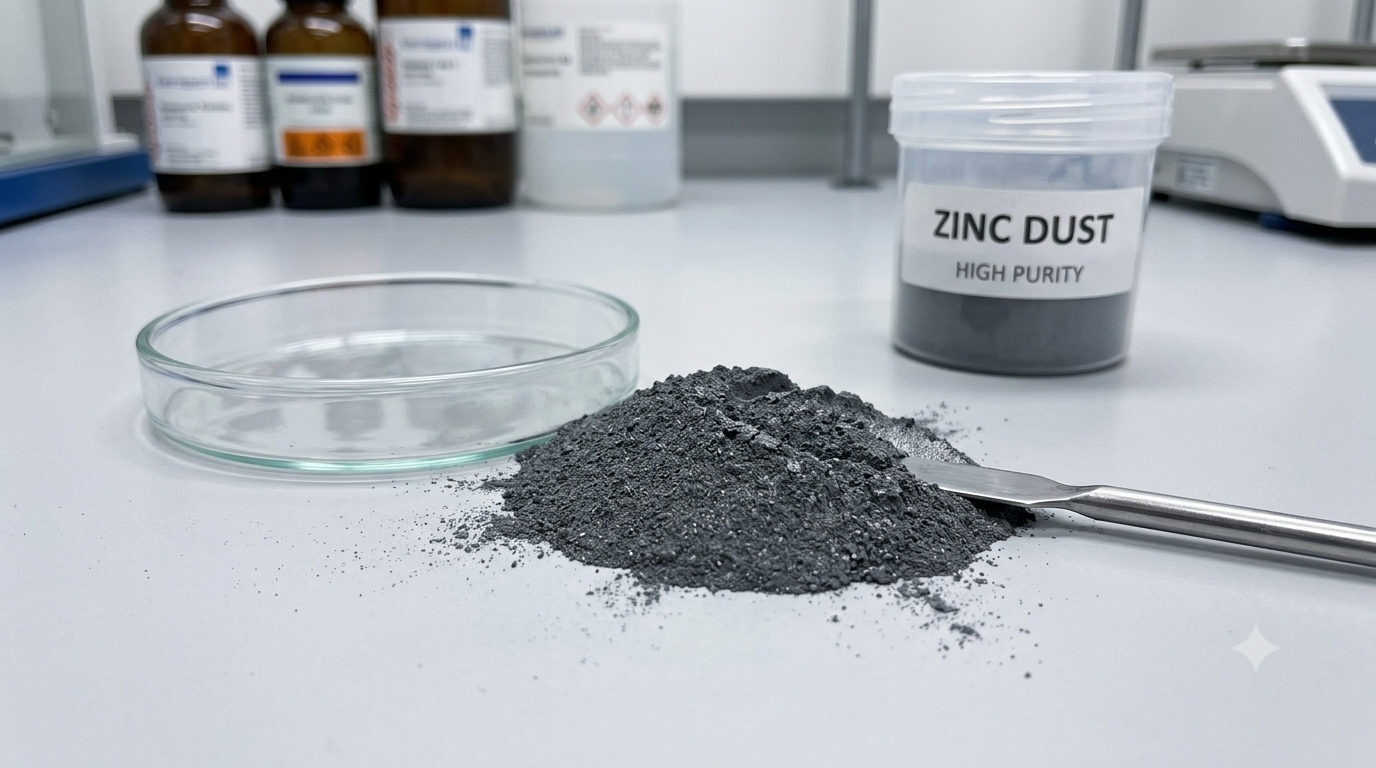
The properties of this material can vary depending on its grade, production method, particle size,
and zinc content. Consequently, buyers should compare technical specifications when evaluating products
from different suppliers.
Important properties can include zinc purity, particle size, physical appearance, moisture content,
bulk density, and chemical composition. Furthermore, the required specification may differ between
coatings, chemical processing, and other industrial applications.
For bulk procurement, a current COA, TDS, or test report can help buyers determine
whether the available material matches their technical requirements.
Key Specifications to Check Before Buying
Before purchasing this material, industrial buyers should review several technical parameters.
These specifications help determine whether the product suits the intended process.
- Zinc content: This indicates the concentration of zinc in the material.
- Particle size: Particle size can influence handling, dispersion, and application performance.
- Moisture: Moisture content can affect storage and processing requirements.
- Chemical composition: Buyers should review other elements or impurities against the required specification.
- Appearance: Color and physical form can provide useful information during material inspection.
- Packaging: Packaging should support safe transportation, storage, and handling.
- COA or test report: A current test report can help verify important material parameters.
Industrial Applications
This zinc-based material has applications across several industrial sectors. However, the required grade
can vary depending on the process and final product.
Protective Coatings
Manufacturers use zinc-based materials in certain protective coating systems, particularly where zinc-based
protection is required. Its particle characteristics and zinc content can influence coating performance.
Chemical Processing
Manufacturers can use this material as a raw material or reactive zinc source in selected chemical processes.
Therefore, purity and chemical composition can become important when buyers source material for chemical
applications.
Metal Treatment
Certain metal treatment and metallurgical processes can use zinc-based materials. In these applications,
buyers generally select the product according to process requirements and required zinc content.
Industrial Manufacturing
Manufacturers can also use zinc-based materials in other industrial formulations and production processes.
Therefore, buyers should match the specification with the application before commercial procurement.
Available Grades
Zinc dust grades can differ based on zinc content, particle size, chemical composition,
and intended application. Consequently, one specification may not suit every industrial requirement.
High-Purity Grade
High-purity material suits applications that require a higher zinc concentration and controlled impurity
levels. Buyers should confirm the exact purity specification through a COA or laboratory test report.
Industrial Grade
Industrial-grade material can serve applications where technical specifications differ from high-purity
grades. The suitable grade depends on the process and buyer requirements.
Fine Grade
Fine material contains smaller particles and may suit applications where particle size plays an important
role. Therefore, buyers should request particle size information before placing an order.
Zinc Dust vs Zinc Powder
The terms zinc dust and zinc powder sometimes appear interchangeably
in commercial discussions. However, buyers should check technical specifications instead of relying only
on the product name.
Particle size, purity, production method, chemical composition, and application can vary between products
described as zinc dust or zinc powder. Therefore, buyers should clearly communicate their required
specifications to the supplier.
When sourcing internationally, it is also useful to confirm the product description, packing, available
test reports, and applicable customs classification with the relevant professionals.
Factors Affecting Material Quality
Several factors can affect the suitability and consistency of this material. Therefore, buyers should
evaluate products using a combination of technical and commercial parameters.
Zinc Purity
Zinc purity remains an important specification for many industrial applications. A higher zinc content
may suit processes with strict chemical specifications.
Particle Size
Particle size can influence dispersion, reaction behavior, handling, and processing. Consequently,
buyers should request the particle size specification when it matters to the application.
Impurity Levels
Other elements can affect material suitability. Therefore, a chemical analysis or COA can help buyers
review impurity levels before purchasing.
Moisture and Storage
Moisture and storage conditions also require attention. Proper packaging and storage can help maintain
material condition during transportation and before use.
How to Select the Right Grade
Selecting the right zinc dust grade starts with understanding the intended application.
Different processes can require different purity, particle size, and chemical specifications.
First, buyers should define the required zinc content and particle size. Next, they should confirm
chemical composition, moisture, packaging, and other technical requirements.
Furthermore, buyers should request a recent COA, TDS, or test report. For larger
purchases, they can also evaluate a sample before confirming the complete bulk order.
Why COA and Test Reports Matter
A Certificate of Analysis (COA) provides useful information about the tested material. Therefore,
it can help industrial buyers compare a supplier’s product against their required specification.
Depending on the product and supplier, a test report may include zinc content, chemical composition,
particle size, moisture, and other relevant parameters.
However, buyers should review the actual test conditions and report date. In addition, a sample inspection
can provide further confirmation before purchasing a large quantity.
Storage and Handling Guidelines
Buyers should follow the supplier’s technical and safety documentation when storing and handling this
finely divided material. Because the product contains fine particles, appropriate industrial handling
practices remain important.
Buyers should keep the material in suitable packaging and a dry, controlled storage environment.
In addition, they should avoid unnecessary exposure to moisture, contamination, and unsuitable
storage conditions.
Always follow the supplier’s SDS, safety instructions, and applicable workplace requirements
when handling the product.
How Buyers Should Check the Material Before Purchasing
Before purchasing this material in bulk, buyers should clearly communicate the required specification
to the supplier. In particular, the inquiry should mention zinc content, particle size, quantity,
application, packaging, and destination.
Furthermore, buyers should request the latest COA and TDS and, where appropriate,
ask for a sample for evaluation. As a result, they can compare available material before placing
a large order.
- Confirm the required zinc content.
- Check particle size and relevant physical specifications.
- Request the latest COA or test report.
- Check packaging and available quantity.
- Confirm the intended industrial application.
- Evaluate a sample when required.
- Confirm commercial terms and delivery requirements.
Bulk Procurement Guide
For bulk procurement, consistency and specification remain important considerations. Therefore,
industrial buyers should compare suppliers based on material specifications, documentation,
quantity availability, packaging, and commercial terms.
At Shlokar International, we work with industrial buyers and suppliers for bulk
raw material requirements. Our approach focuses on understanding the required specification and
matching it with available material.
If you are looking for zinc dust for an industrial application, share your required specification,
quantity, destination, and application. We can check available material according to your requirements.
Related Zinc Products
If you are sourcing zinc-based industrial raw materials, you can also explore our Zinc Oxide.
You can also contact Shlokar International for current availability, specifications, and bulk
requirements for zinc-based raw materials.
Key Takeaways
- Zinc dust is a finely divided zinc-based material used in various industrial applications.
- Its properties can vary according to purity, particle size, production method, and grade.
- The material supports selected coating, chemical, metal treatment, and manufacturing applications.
- Therefore, buyers should select the grade according to the intended application.
- Moreover, zinc content and particle size are important specifications to check.
- A current COA, TDS, or test report can help verify material specifications.
- Storage and handling should follow the supplier’s safety documentation.
- For bulk purchases, a sample evaluation can help confirm material suitability.
Frequently Asked Questions
What is zinc dust?
Zinc dust is a finely divided form of zinc supplied as a powder. Manufacturers use it in selected
industrial applications such as coatings, chemical processing, metal treatment, and manufacturing.
What is zinc dust used for?
Manufacturers can use this material in protective coating systems, chemical processing, metal treatment,
and other industrial manufacturing applications. The required grade depends on the specific process.
What are the important specifications?
Important specifications can include zinc content, particle size, chemical composition, moisture,
physical appearance, packaging, and applicable test results.
How do I choose the right grade?
The appropriate grade depends on the intended application and technical requirements. Buyers should
compare zinc content, particle size, chemical composition, and other specifications with their process
requirements.
What documents should I request when buying zinc dust?
Buyers can request a current COA, TDS, test report, and SDS where applicable. These documents can
provide useful information about product specifications, quality parameters, and safe handling.
Can zinc dust be purchased in bulk?
Yes. Suppliers can source this material for bulk industrial requirements. Buyers should provide the
required specification, quantity, application, packaging preference, and destination when requesting
a quote.
Why is particle size important?
Particle size can influence handling, dispersion, reaction behavior, and processing characteristics.
Therefore, buyers should confirm the required particle size before purchasing.
How should zinc dust be stored?
Buyers should store the product according to the supplier’s SDS and safety instructions. Suitable
packaging, dry storage, and appropriate industrial handling practices should be followed.
Conclusion
Zinc dust is an important zinc-based raw material used across various industrial
applications. Its suitability depends on factors such as zinc content, particle size, chemical
composition, and the requirements of the final application.
Therefore, buyers should not select the product only by name. Instead, they should review the technical
specification, COA, TDS, test report, sample, packaging, and application requirements. As a result,
a complete evaluation can support more consistent bulk procurement.
Shlokar International works with industrial buyers and suppliers for bulk raw material
requirements. Contact us to discuss your required grade, specification, quantity, and application.
Email:
info@shlokarinternational.com
WhatsApp:
+91 96877 76077